Portable Toilet Dimensions & Capacity Guide | Find the Best Fit
Portable Toilet Dimensions & Capacity Guide | Find the Best Fit
As an avid traveler and someone who appreciates comfortable living, I've gone through a lot of trial and error when it came to choosing the perfect portable toilet. Today, I'm sharing my ultimate guide to help you avoid the same mistakes and find the ideal portable toilet for your needs.
📏 Dimensions & Capacity: The Two Core Elements of Choosing a Portable Toilet
Many people focus solely on capacity when buying a portable toilet, thinking that more volume equals better performance. However, dimensions are equally important! Capacity determines how often you need to empty the toilet—too small and you'll be constantly cleaning it; too large and it might be cumbersome to handle. Dimensions, on the other hand, directly impact whether the toilet will fit in your intended space and how comfortable it is to use.
🚽 Key Dimension Considerations
- Total Height & Seat Height: A seat height of 40-45 cm is generally comfortable. This is especially important for elderly users or children who might struggle to lower themselves or stand up from a lower seat.
- Width & Depth: Width typically ranges from 30-40 cm, and depth from 40-50 cm. These dimensions ensure stability and prevent the toilet from wobbling during use.
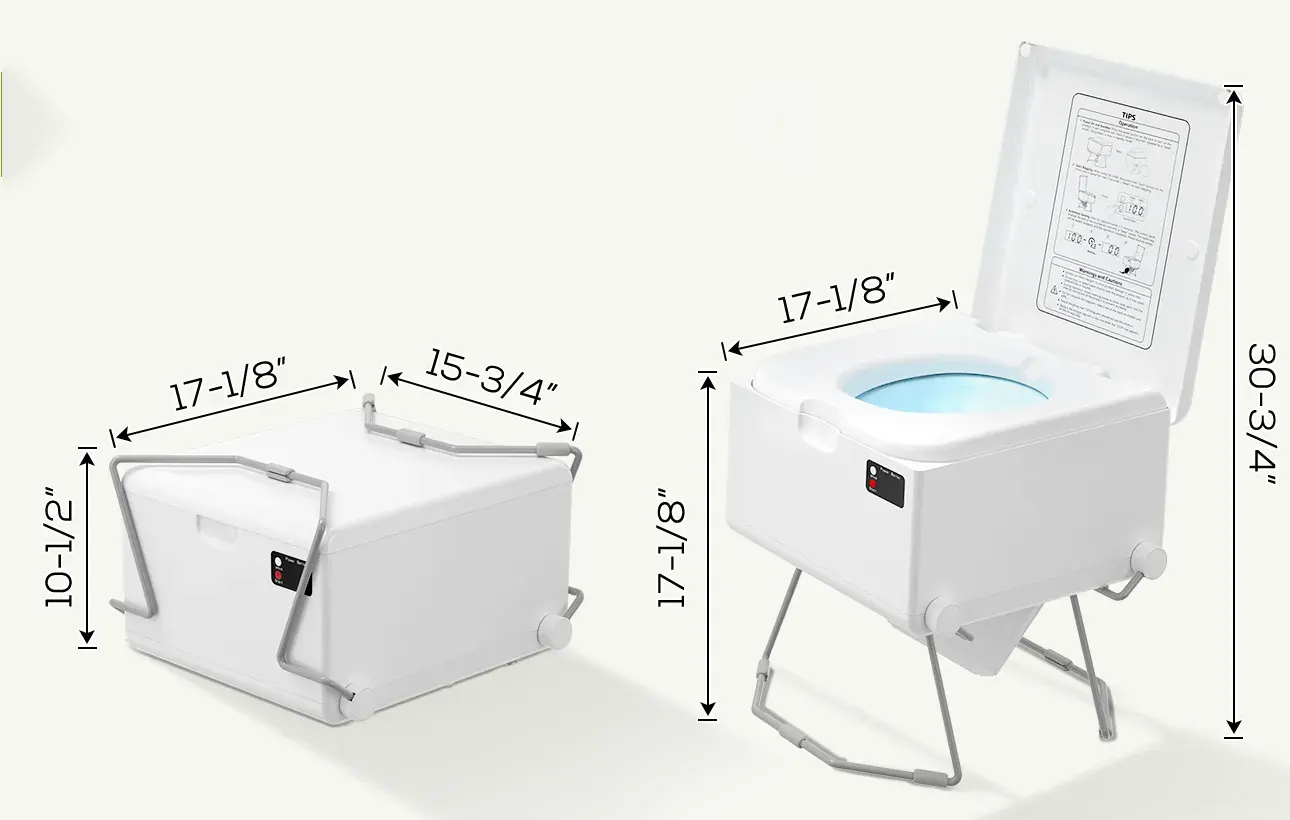
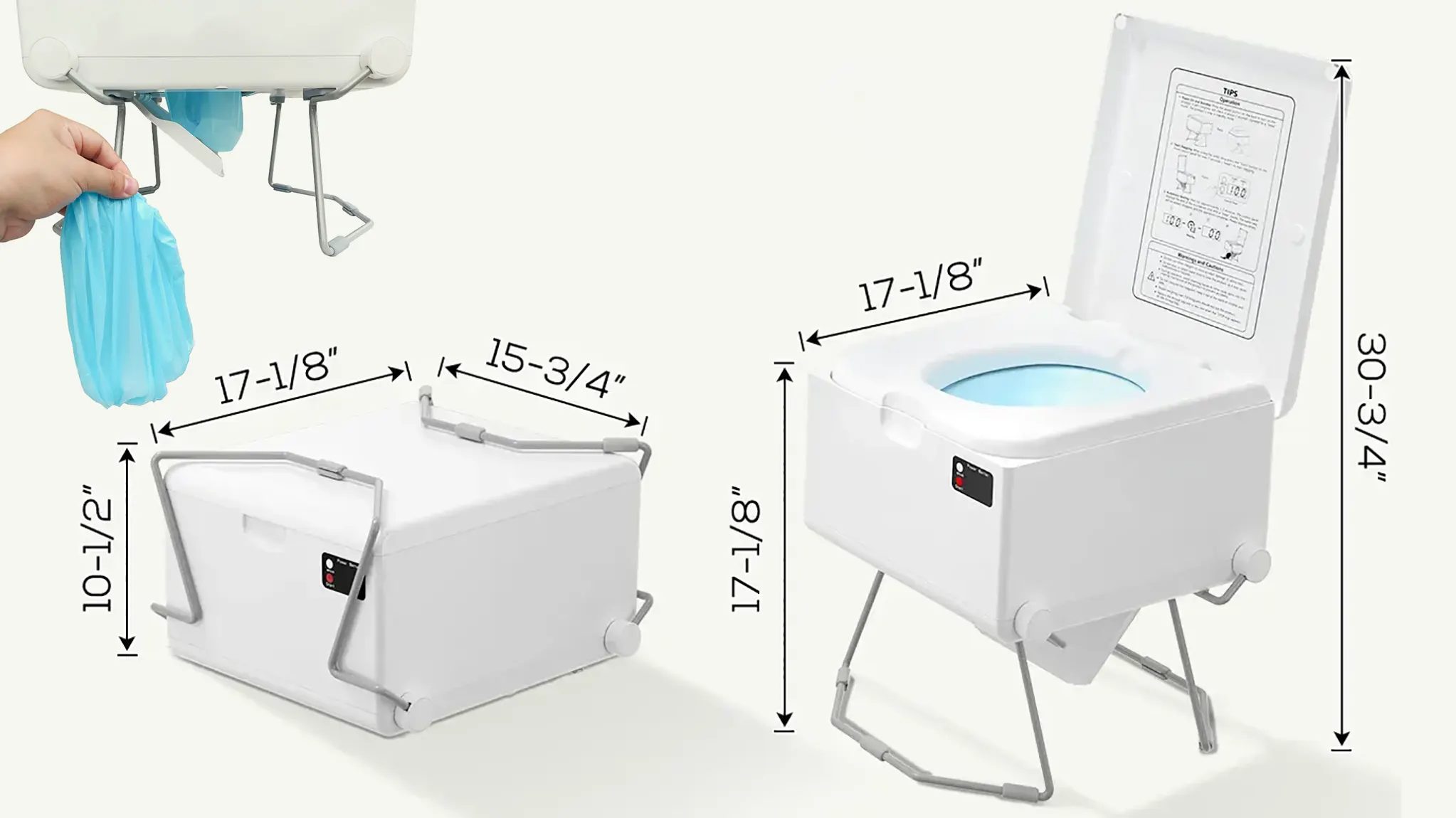
- Storage Dimensions: If you're frequently hiking, camping, or driving, the folded size is crucial. For example, the Modiwell portable toilet folds down to just 17″D × 17″W × 11″H, making it perfect for storage in tight spaces like car trunks or backpacks.
💧 Key Capacity Considerations
- For Chemical Flush Toilets: Look for a fresh water tank capacity of 3-5 liters (enough for several flushes) and a waste tank capacity of 5-10 liters, which is suitable for short-term use.
- For Dry Toilets: The solid waste collection bucket or bag should have a capacity of 10-15 liters, while urine separators typically need 3-5 liters. The Modiwell toilet bag, for instance, holds about 1000 ml of waste—enough for a single use as most people excrete 200-500 ml at a time.

🎯 Choosing the Right Portable Toilet for Different Scenarios
👨🚀 Single Use: Small and Portable is King
Scenarios: Hiking, camping, emergency backup, self-driving tours.
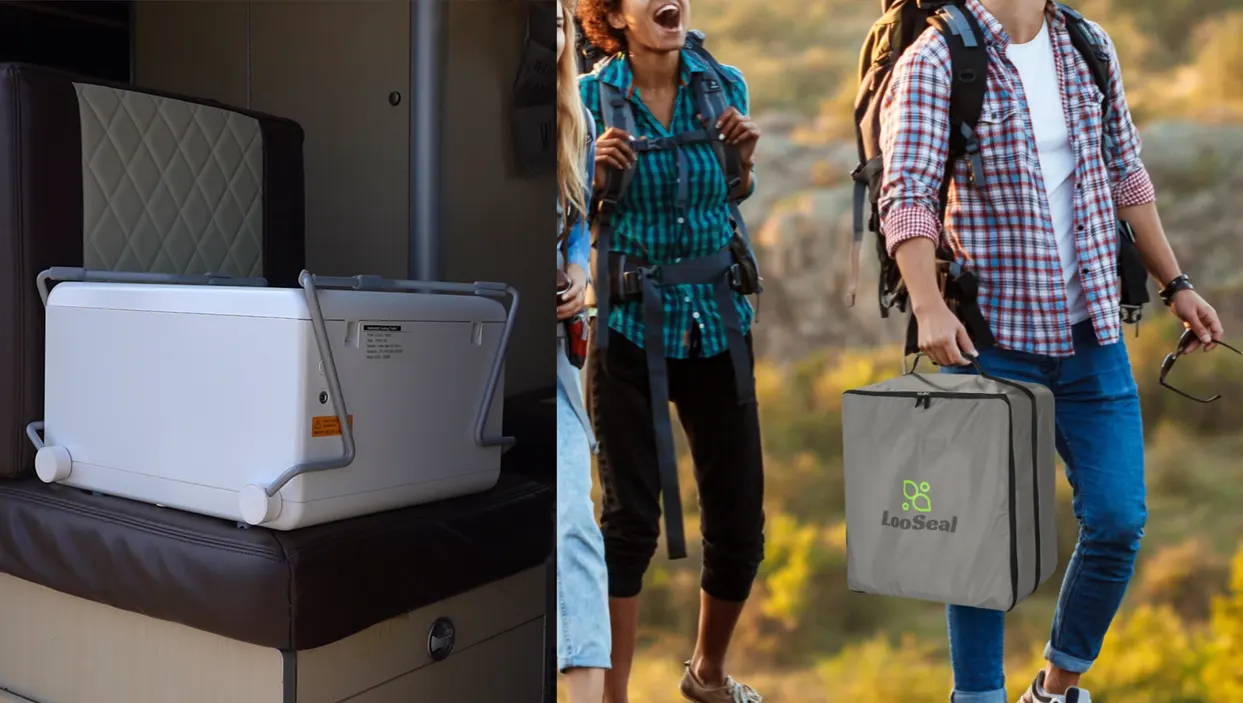
- Dimensions: Prioritize the smallest storage size and lightweight design. Folding, bag-type, or small bucket-type portable toilets are ideal. The height and width should be compact enough to fit into a backpack or small car space.
- Capacity: A flush toilet with a waste tank capacity of 5-10 liters, or a packing/collection bag that can accommodate 1-2 excretions. The small volume per emptying makes it easy to handle.
👵 Double/Couple Use: Balance Capacity and Space
Scenarios: Short-term RV travel, camping at established campgrounds.
- Dimensions: Consider placing it in a fixed space within an RV or camping tent. It should provide a comfortable sitting position while being compact enough to fit in most RVs or larger tents.
- Capacity: A flush toilet with a waste tank capacity of 10-15 liters, or a dry toilet that can meet a 2-3 day usage cycle.
👨👩👧👦 Family Use: Large Capacity and Stability Preferred
Scenarios: Family RV trips, extended camping, home assistance.
- Dimensions: Look for a toilet with high stability, moderate seat height, and safety features for children. If space allows, choosing a product closer to the size of a home toilet provides a more comfortable experience. The Modiwell portable toilet, when unfolded, stands at about 31 inches tall, accommodating adults while being safe for children to use with guidance.
- Capacity: A flush toilet with a capacity of 15-20 liters or even larger (if it can be easily emptied), or a dry toilet that can handle high-frequency use. With many family members and frequent bathroom breaks, a larger capacity means fewer emptying sessions.
Tip: Before purchasing, always measure the length, width, and height of the space where you'll place the toilet. This could be your RV bathroom, car trunk, or even a corner by your bed. Also, leave a little extra room for easy use.
♿ Special Needs (Elderly, Patients): Comfort and Ease of Use Are Key
Scenarios: Home care, rehabilitation assistance.
- Dimensions: The seat height should be close to or adjustable to that of a home toilet, ideally paired with special toilet safety rails to ensure safe and comfortable sitting and standing. The base should be stable and non-slip, making it easier for those with limited mobility to transfer on and off.
- Capacity: A larger capacity can reduce the frequency of emptying by caregivers, or choose a dry toilet that is easy to empty.
🔥 Emergency Reserve/Small Spaces: Compactness and Functionality
Scenarios: Home emergency toilet, backup in small apartments.
- Dimensions: Prioritize the most compact storage size possible. The Modiwell portable toilet, when folded, measures only 17″D × 17″W × 11″H, making it perfect for small spaces and emergency reserves.
- Capacity: Typically small to medium capacity to meet short-term emergency needs (1-3 days).
⭐ Additional Considerations When Choosing a Portable Toilet
- Emptying and Disposal Method: Is emptying simple, hygienic, and contactless? The Modiwell automatic packaging system achieves completely contactless disposal. Waste is sealed in the storage bag and can be thrown away immediately upon removal, greatly enhancing convenience.
- Weight: Especially important for portability after the toilet is full. The Modiwell portable toilet only handles independently sealed packaging bags each time, which is much lighter than the waste liquid tank of traditional toilets, reducing transportation burdens.
- Odor Control: Sealing is key. Modiwell's automatic packaging and sealing technology effectively blocks odor spread, keeping the environment fresh.
- Material and Durability: Ensure the product is sturdy and has strong load-bearing capacity.
- Consumables: Consider the availability of special packaging bags and other consumables.
Summary
Choosing the right dimensions and capacity for a portable toilet isn't about "bigger is always better" or "smaller is always better." You need to consider several factors: how you'll use it, how many people will use it, how often, where you'll store it, and what makes you comfortable.
We hope this guide helps you pick the perfect portable toilet. If you have any questions about the Modiwell portable toilet or want to learn more details, just ask! We're here to help.



Comments
Post a Comment